Facility Dogs
Our Facility Dogs provide specialised support for your organisation.
A calming presence when it matters most.
Support, comfort and connection in places where it’s needed every day.
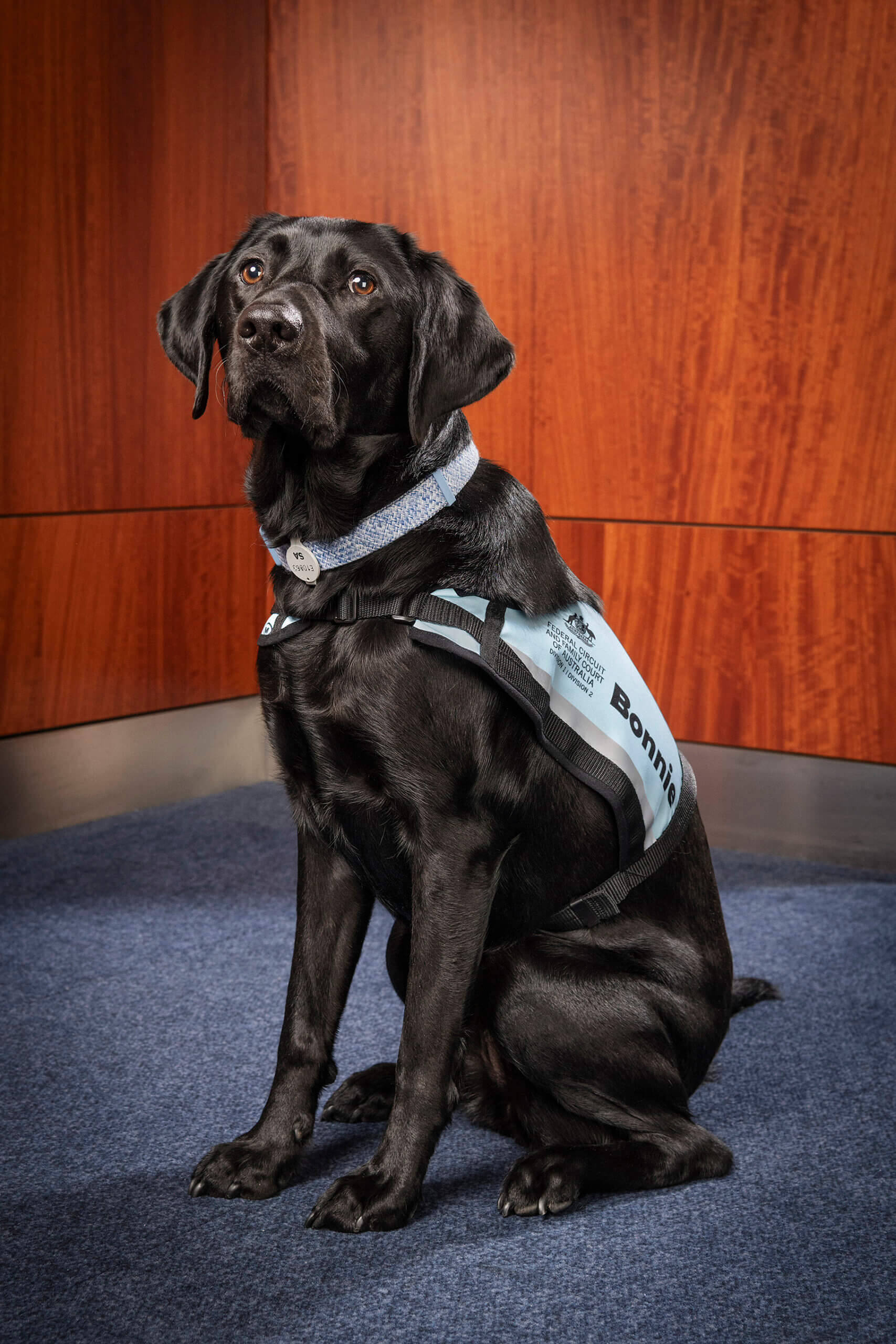
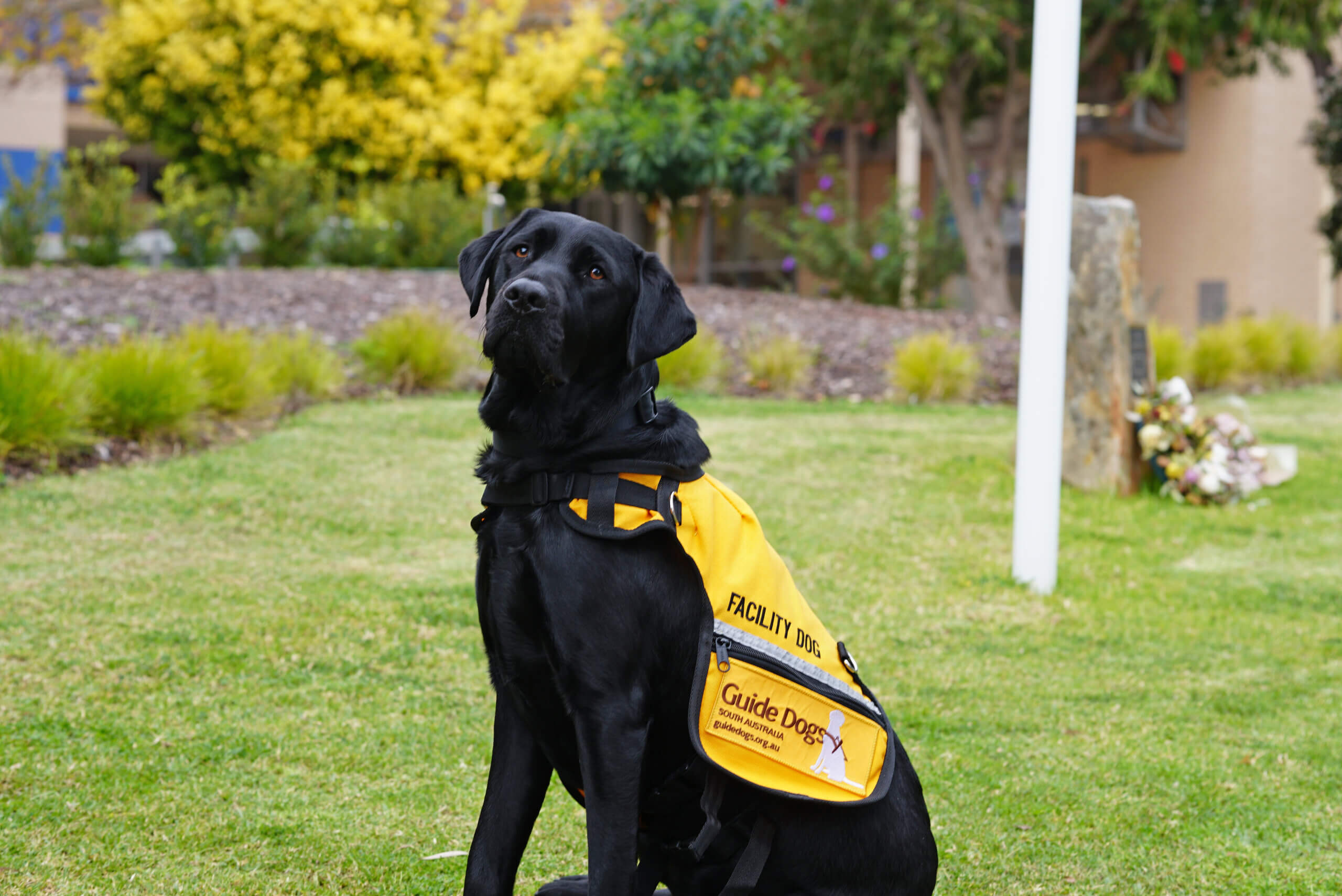
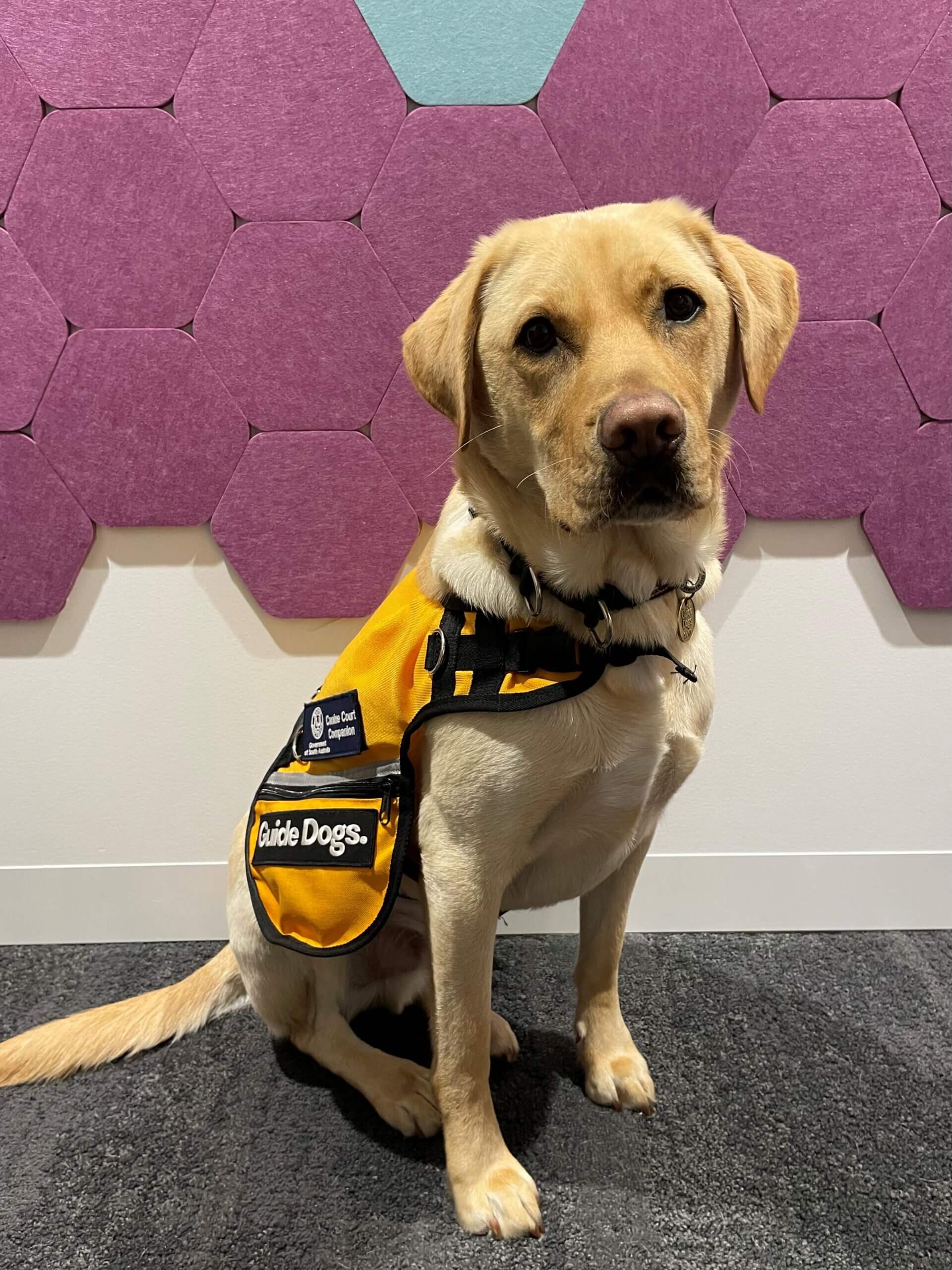
A Facility Dog is a specially trained Assistance Dog able to provide support in a variety of settings, including schools, courts, airports, health facilities and more.
They meet the standards of Assistance Dogs International, have Public Access Rights within their facility, and can bring comfort and companionship, allowing people to better engage with your organisation.
With endless placement possibilities, Facility Dogs can make a substantial contribution to the community.
Who would benefit from a Facility Dog?
Who we can help.
Facility Dogs work with a handler to assist with a variety of tasks depending on the setting.
For example, a Facility Dog in an educational setting can assist in emotional and social development, physical wellbeing and enhance and improve student learning outcomes by making the environment less confronting. This can encourage students to come & remain at school, relax, focus on their work, and improve connections between students and staff.
Some Facility Dog examples include:
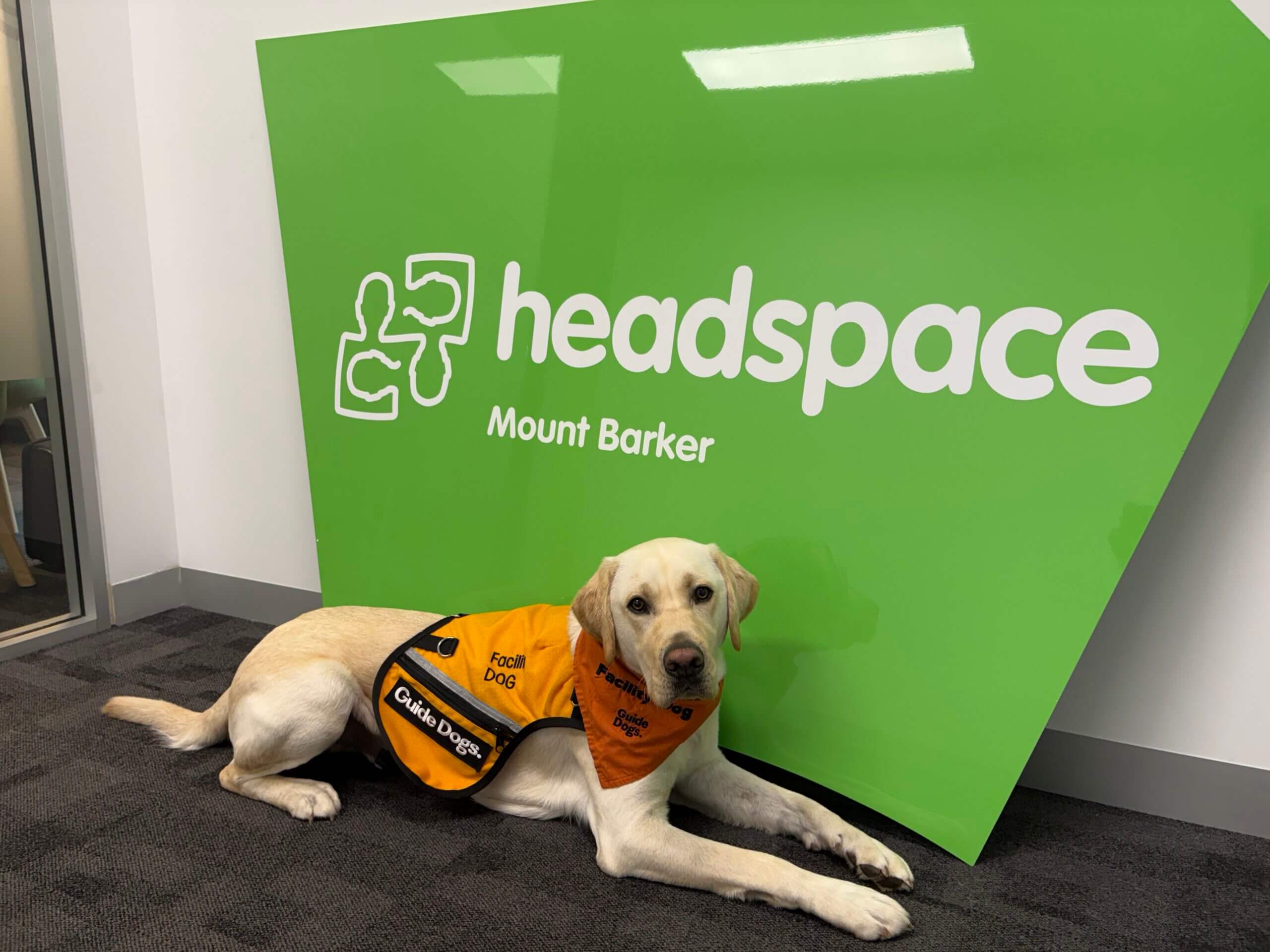
- Facility Dog Marley – Marley has been placed at headspace Mount Barker to provide an alternative source of comfort and sense of safety for young people who are experiencing distress, anxiety or apprehension about seeking mental health support.
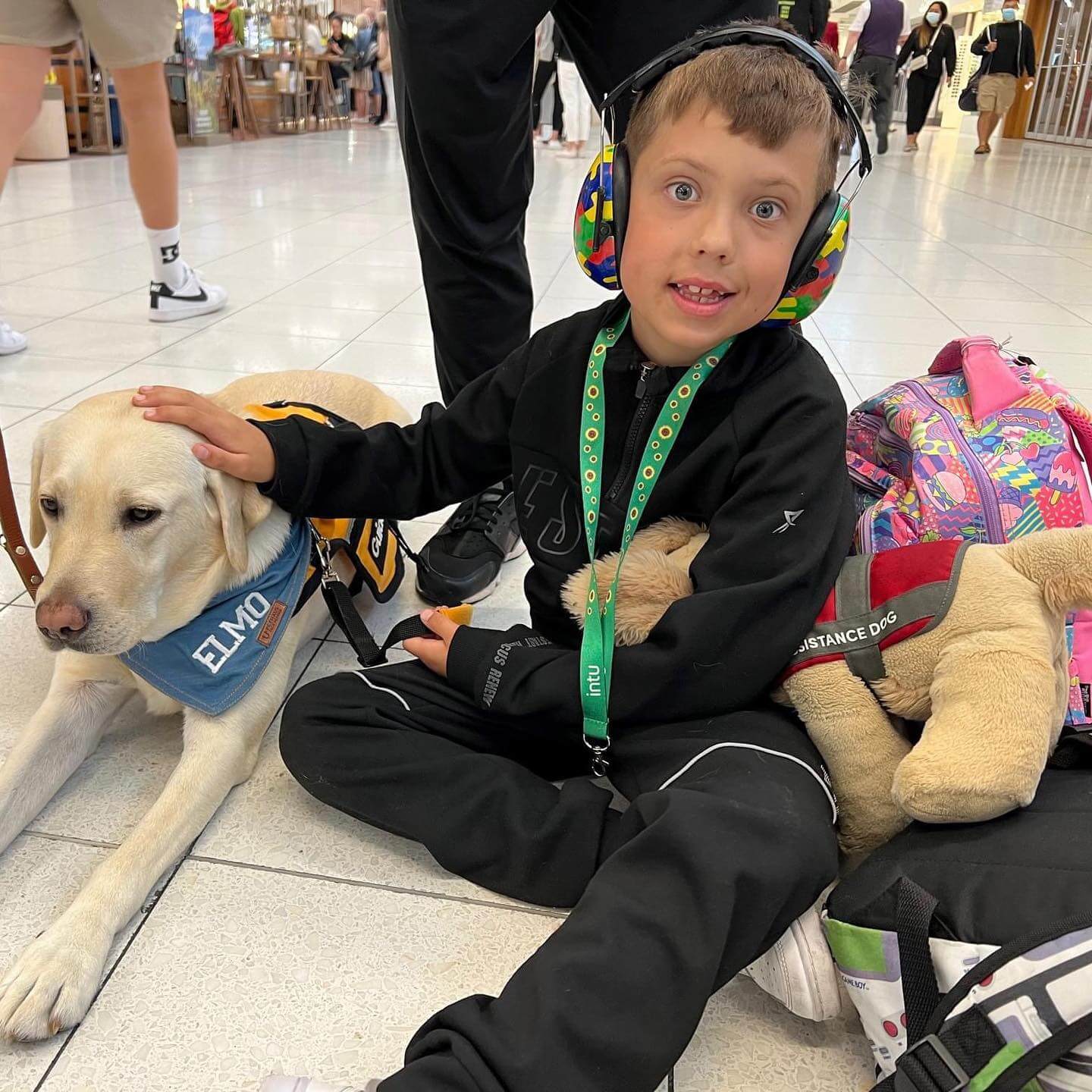
- Airport Facility Dog Elmo – Elmo is the first internationally accredited Facility Dog at any Australian airport. He spends his days working at Adelaide Airport, providing support and reassurance to nervous travellers and hose with specialised support needs.
- Canine Court Companion Zeb – Zeb works with the Office of the Director of Public Prosecutions, providing comfort and support for vulnerable witnesses and victims of crime.
- Facility Dog Iris – Iris works with students at Wirreanda Secondary School. She helps students with their physical and emotional wellbeing, social development and learning enhancement.
Program Options
We work with you to suit your needs.
Our Facility Dog Program offers three options, designed to best suit the needs of your organisation.
Our permanently placed Facility Dogs are embedded within your facility, specially trained with the skills to assist your team, students, or clients.
Our Visitation Program offers scheduled visits from an accredited dog and a member of our team, without the need for a Primary Handler.
Pats & Chats is similar to our Visitation Program, and can be arranged on a more ad-hoc or casual basis.
We’re ready to lend a helping paw in whatever way your organisation needs.
What are the next steps?
Make an enquiry.
To find out more or to apply for a Facility Dog, visit, or Pat & Chat, please contact info@guidedogs.org.au or call 1800 757 738.
To stay up to date with Guide Dogs SA/NT, please sign up to our newsletter.
Learn more about Facility Dogs
Frequently asked questions.
Our Facility Dogs are trained to work with individuals or groups in a facility setting such as schools, mental health organisations, first responders, airports, aged care facilities or courts.
Our Facility Dogs are trained to a very high standard by Guide Dogs SA/NT and both the dog and handler must pass a Public Access Certification Test (PACT), differentiating them from Therapy or Wellbeing Dogs.
With endless placement possibilities, Facility Dogs can make a substantial contribution to the community.
Facility Dogs work with a handler to assist with a variety of tasks depending on the setting. For example, a Facility Dog in an educational setting can assist in emotional and social development, physical wellbeing and enhance and improve student learning outcomes by making the environment less confronting. This can encourage students to come & remain at school, relax, focus on their work, and improve connections between students and staff.
Facility Dogs are partnered with one nominated Primary and at least one Secondary Handler, who are responsible for coordinating the Facility Dog’s work activities, training, and wellbeing. The Handlers must control the dog with force-free, positive reinforcement and consistent communication, as outlined by Guide Dogs SA/NT.
Each Handler is responsible for respecting the Facility Dog’s needs whilst ensuring positive and appropriate interaction with clients or customers. A nominated Handler, usually the Primary, will provide a secure and loving home for the Facility Dog and be responsible for its daily health and welfare needs.
A Facility Dog with the certified handler has access rights only when working directly with the client in the authorised work setting. The handler/s will be provided with a laminated ID card with photo and names of the dog and partner. The dog must wear a logo bandana and jacket when working in the work setting.
The primary handler and designated secondary handler will undergo a five-day training program that includes the completion of the PACT test. The individualised training program cannot take place until this test is successfully past. All dog handlers who are required to work the dog (in its working jacket) through a public area are required to undergo training and pass the PACT test. PACT recertification is required yearly.
Following initial discussions around budget, timeframe and expectations, the organisation can complete an application form.
Once an application is received, an instructor will come to your organisation to assess the facility environment, working dog’s role and three key tasks, and client/customer needs. Next, all potential handlers will be required to attend a handler assessment day to ascertain suitability for the primary and secondary handler’s role.
The Facility will be placed on Guide Dogs SA/NT Facility Dog waiting list, so that Guide Dog’s Assistance dog instructor/s can review assessment information as dogs are progressing through training to assess suitability. This may require training dogs to visit the facility.
The team will work to identify a dog with appropriate temperament and skills to meet the needs of the Facility, handler/s and client/customer. A matching visit will need to be completed at the Facility.
If a dog is deemed suitable, training will be consolidated for the role in the Facility.
To ensure the welfare of the Facility Dog, your organisation must:
- Provide purposeful work for the Facility Dog for a maximum of five hours per day. The Facility Dog will be trained to do specific tasks, such as providing comfort and reassurance by lying their head on a client’s lap on command.
- Nominate a Primary Handler who will take overall responsibility for the Facility Dog’s wellbeing and provide a safe, secure, and loving home for the Facility Dog outside of work hours.
- Nominate suitable staff members as Secondary Handlers.
- Provide a suitable area in the workplace for the Facility Dog to rest.
- Always provide appropriate supervision for the Facility Dog.
- Provide for the Facility Dog’s physical, psychological and financial needs, including pet insurance.
- Ensure key handlers complete the initial training course at Guide Dogs SA/NT in Adelaide CBD and commit to annual recertification training.
- Meet funding requirements for initial and ongoing costs of a Facility Dog.
We normally ask that you allow 9-12 months from application approval, matching, primary and secondary handler training and placement of your Facility Dog.
Our Facility Dogs are Labradors or Labradors cross Golden Retrievers.
Dogs in the Facility Program are aged at least 18 months – 2 years, depending on when they complete training and are matched with a Facility.
Facility Dogs can provide support in a variety of settings. This can include schools, mental health organisations, first responders, airports, aged care facilities or courts.
Some examples include:
- Facility Dog Iris – Iris is placed at Wirreanda Secondary School as part of their WAVE program, where learner wellbeing is a primary focus. She helps students to better engage in classroom activities, and is a source of comfort for students needing support.
- Airport Facility Dog Elmo – Elmo is the first internationally accredited Facility Dog at any Australian airport. He spends his days working at Adelaide Airport, providing support and reassurance to nervous travellers and hose with specialised support needs.
- Canine Court Companion Zeb – Zeb works with the Office of the Director of Public Prosecutions, providing comfort and support for vulnerable witnesses and victims of crime.
Yes, Facility Dogs have Public Access Rights, enabling them access rights to the Facility they are placed in.
The starting point for the Facility Dog program is $25,410.00 (inc. GST). Currently we offer this under two pricing models:
- Option 1: an upfront 100% payment
- Option 2: packaged over a 3-year contract for repayment, invoiced annually.
We are happy to also discuss payment options with your finance team to see what the best fit may be for you in terms of a pricing model.
As an example of a package breakdown.
Time Frame Amount (inc-GST) Description Year 1 $8,470.00 Year 1 – First instalment Year 2 $8,470.00 + $500.00* Year 2 – Second instalment + PACT recertification, dog and handler skill & annual standard follow up visit + dog welfare check* Year 3 $8,470.00 + $500.00* Year 3 – Third instalment + PACT recertification, dog and handler skill & annual standard follow up visit + dog welfare check* *PACT – Indicative additional costs that would be incurred by your facility to retain the Facility Dog’s accreditation would be $500 per year of service for Public Access Training and welfare checks.
Further training or other engagement would be quoted and charged accordingly.
Once we understand the full purpose of the dog, what additional training requirements may be required for your school and whether additional handlers need to be trained, we can then confirm the pricing and issue a quote.
Facility Dogs are privately funded by the facility they are placed in. Government and/or charity funding is generally not available.
Facilities will receive regular support visits from Guide Dogs SA/NT to ensure animal welfare, dog and handler standards, and continuing to meet the need of the facility.
These occur at regular time intervals:
- Initial – every month for the first 6 months and then onto first annual visit.
- Then, based on the age of the dog:
- 2yrs to 7yrs – every 12 months
- 8yrs to 9yrs – every 6 months
- 10yrs – every 3 months
- Retirement age 11yrs.
Ad-hoc sessions occur on an as needed basis and are available when the dog and/or handlers may be challenged with a particular situation, a new primary or secondary handler is to be introduced, or you may like additional one-on-one training support outside of the contract. This will be charged at a cost per hour. Pricing to be confirmed.
A nominated Handler, usually the Primary, will provide a secure and loving home for the Facility Dog and be responsible for its daily health and welfare needs, both at work and home.