Request a service Donate

Accessing the right tools

Technology to enhance your independence

Technology can make everyday life easier, especially for people living with low vision or blindness.

From accessing information and navigating your surroundings to staying connected with friends, work and hobbies, assistive technology can help you participate more independently in the activities that matter most to you.

Some technologies may be completely new, while others can enhance devices you already use, such as smartphones, tablets or computers. Our team can help you identify the right tools for your needs and provide training to help you use them with confidence.

Assistive technology can support you at home, work, school or while travelling in the community.
Request Support

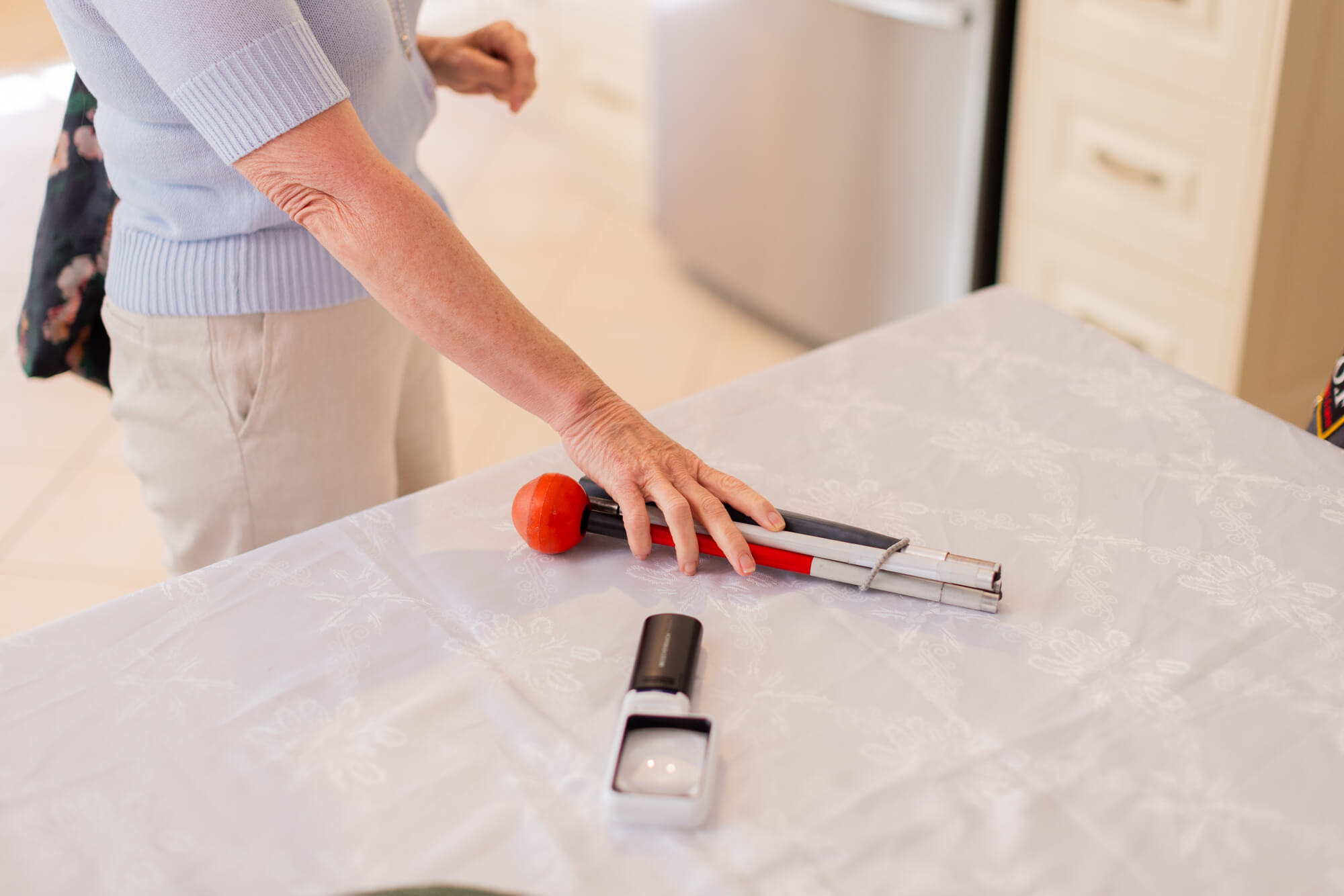
A person’s hand reaches for metal tongs with red silicone tips on a white tablecloth, whilst a black and white magnifying glass rests nearby. A kitchen setting is visible in the background.

Helping you move with confidence

Devices to support mobility goals

There is a wide range of assistive technology available to support safe, confident and independent travel.

Some commonly used options include:

  • Identification Canes: Used to indicate to others that you have low vision or blindness, particularly in busy public spaces and on public transport.
  • Long Mobility Canes: A long cane (or white cane) is a mobility aid used to detect ground hazards, curbs and obstacles to support confident community navigation.
  • Support Canes: Provide the same visibility benefits as an identification cane, while also offering additional balance and stability.
  • MiniGuide: A handheld device that detects objects in your path, such as poles, trees and benches. MiniGuides are typically used alongside a long cane or Guide Dog.
  • Smartphone Accessibility Features and GPS Apps: Many smartphones include built-in accessibility features and navigation tools. We can help you find and learn the apps that best support your goals.
  • Victor Reader Trek: A portable device that provides spoken navigation information, including street names, intersections and nearby points of interest.
  • Guide Dogs: Guide Dogs provide safe, efficient and confident travel through a variety of environments, while also offering companionship and increased independence. Learn more about our Guide Dogs here.

Request Support

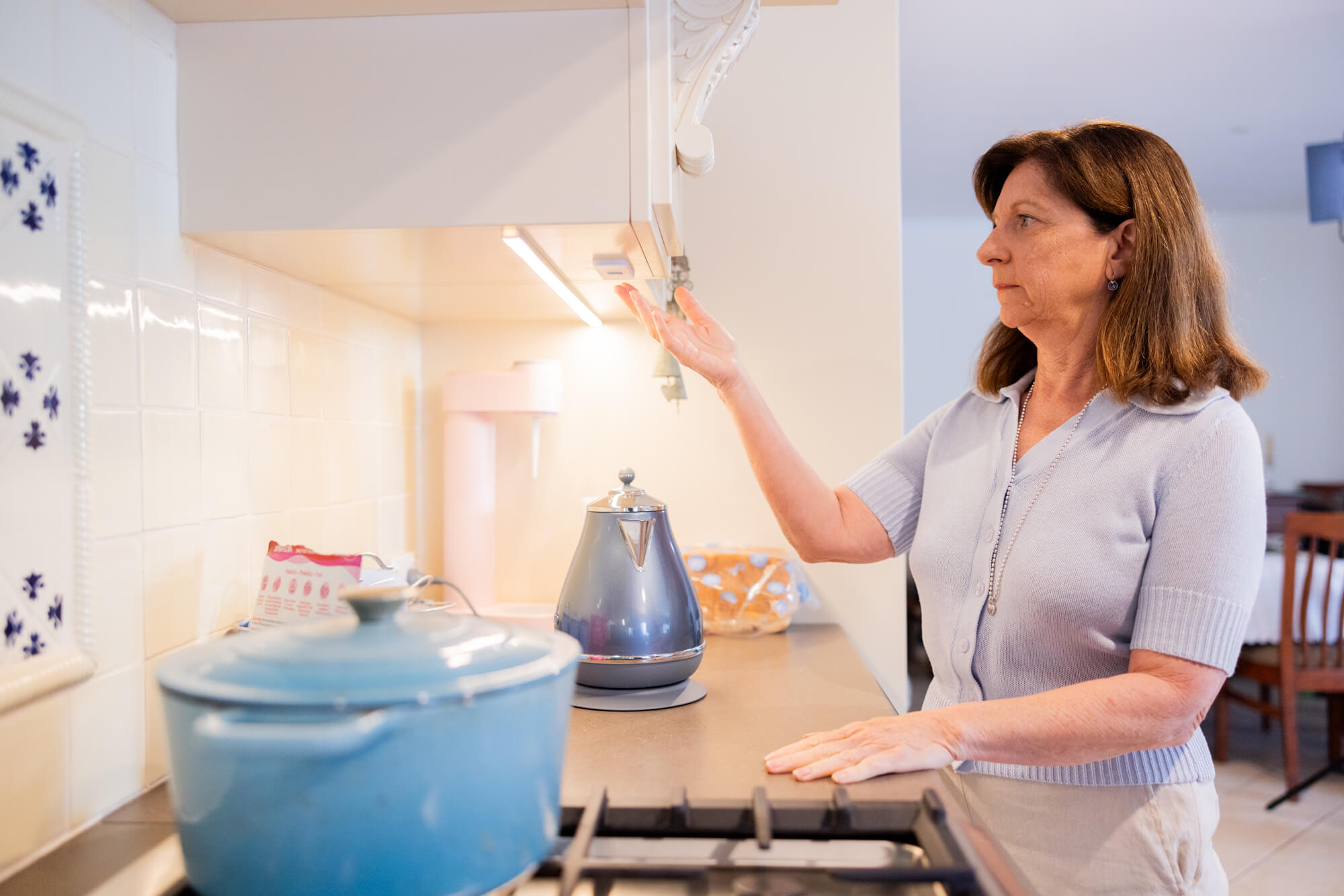
A woman in a light blue jumper turns on an under-cabinet light in a kitchen; a blue pot is on the hob and a sleek, modern kettle sits on the worktop.

Tools for everyday life

Devices to support daily living.

We can recommend a range of adaptive aids and technologies to support independence at home, work, school and in the community.

Recommended equipment may include:

  • Talking clocks and watches
  • Liquid level indicators
  • Magnifiers for reading, work and study
  • Kitchen aids for safe cutting, cooking and measuring
  • Accessible technology and smart device solutions

Our team will work with you to identify equipment that suits your goals, lifestyle and level of vision.

Request Support

Get started.

Make an enquiry.

You don’t need to wait for a diagnosis to contact Guide Dogs SA/NT.

For more information on the kinds of tools and technology available to help you achieve your goals, please contact our Client Services team. Submit an enquiry via the below options:

Service request form.

Referrals are welcomed from individuals, family members and health professionals.