Service Dog Etiquette and Access Rights
Learn how to confidently support people with Service Dogs and help create a more inclusive community.
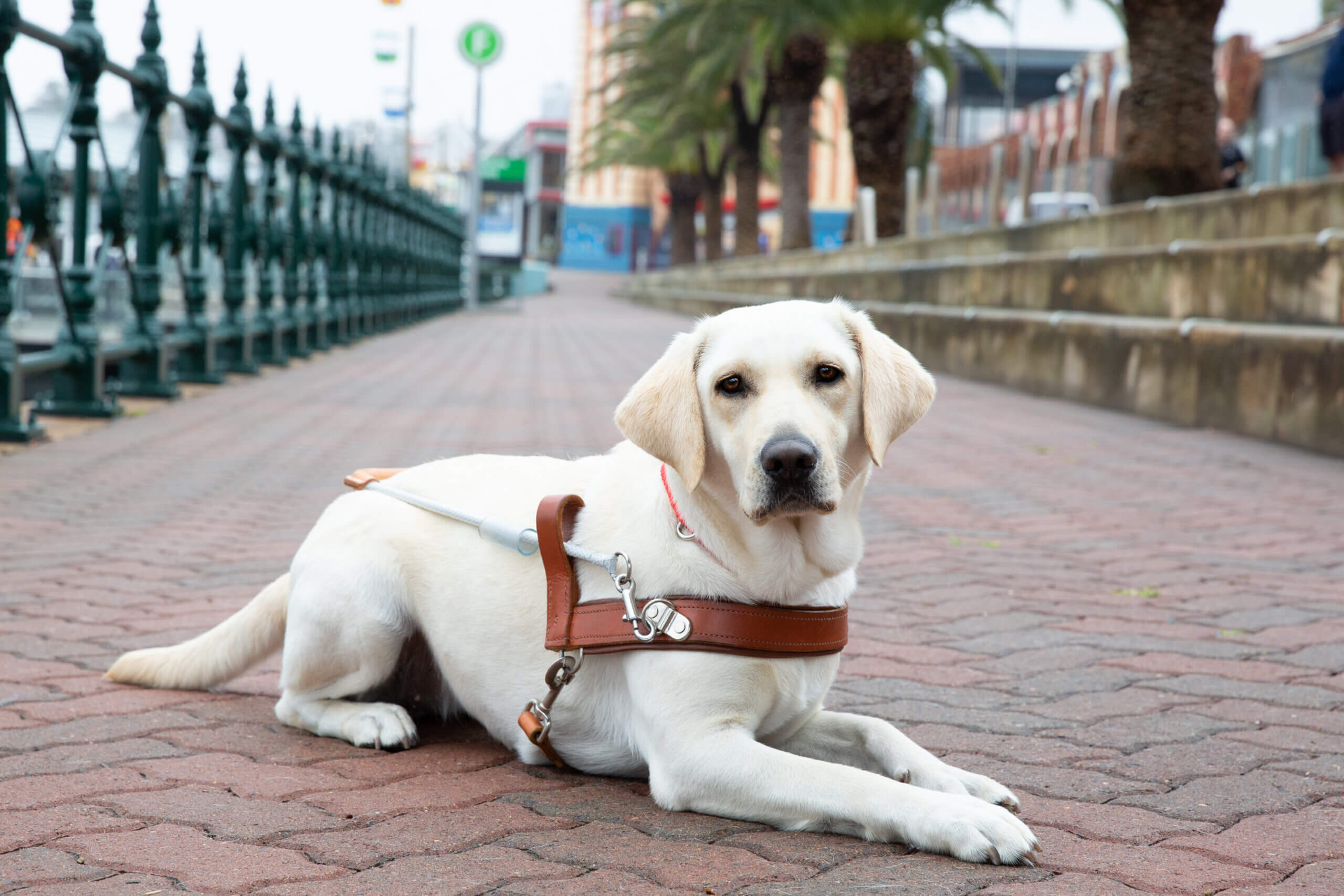
Highly trained companions supporting greater independence.
What is a Service Dog?
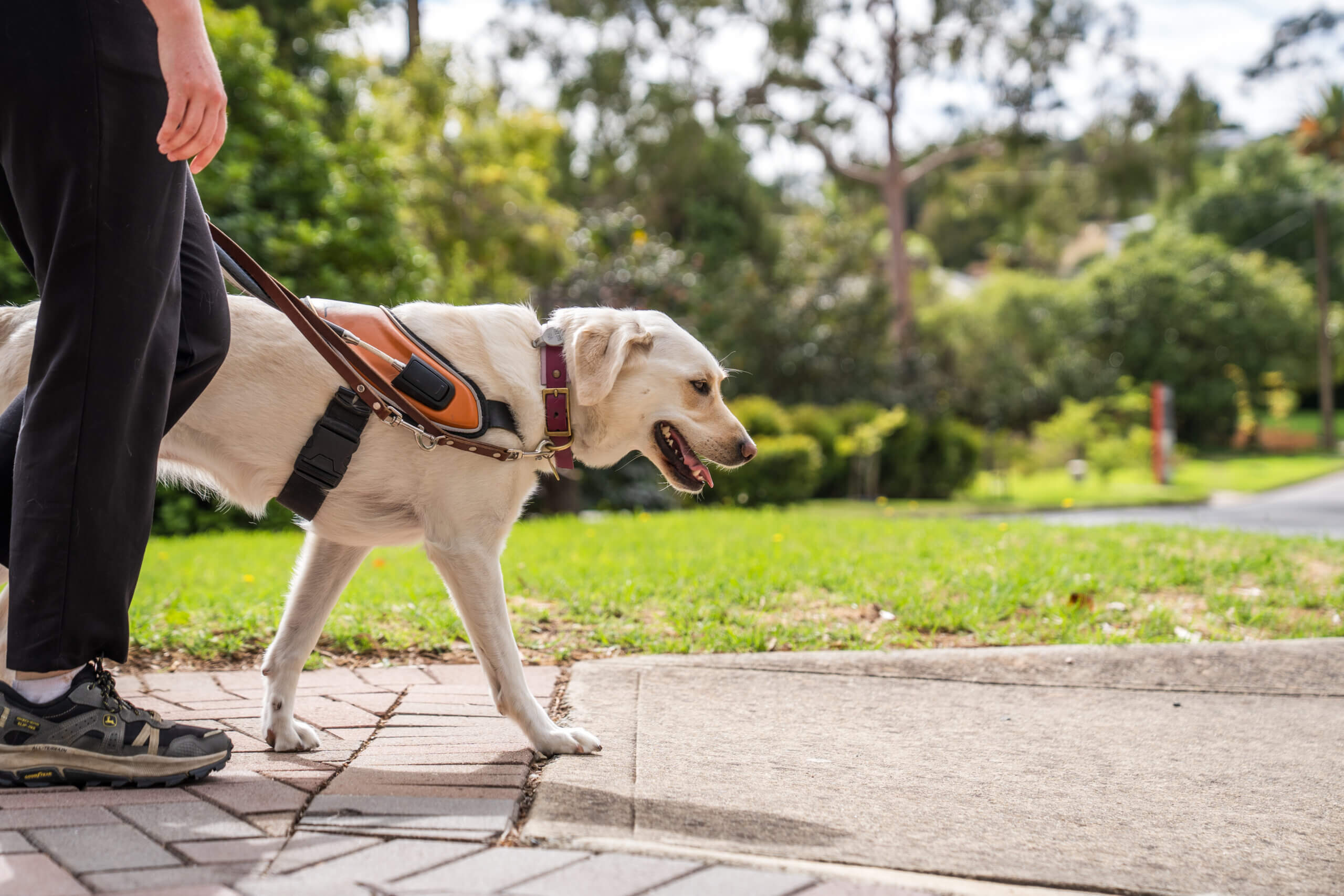
Service Dogs perform an essential role in enabling people living with low vision, blindness and other specialised support needs to live with greater independence, confidence and participation.
Guide Dogs, Assistance Dogs and Facility Dogs complete extensive training before beginning their important careers. Once matched with their handler or organisation, they become trusted working partners who assist with everyday tasks, navigation, safety and wellbeing.
When a Guide Dog is wearing its harness, or an Assistance Dog or Facility Dog is wearing its working coat, they are on duty.

How to interact with a working Service Dog
Service Dog etiquette.
A working Service Dog needs to remain focused on its handler at all times. Even a friendly distraction can interrupt the dog’s concentration and potentially place both the dog and handler at risk.
When you see a working Service Dog, please remember:
- Don’t pat the dog.
- Don’t feed or offer treats.
- Don’t call, whistle at or distract the dog.
- Always speak to the handler, not the dog.
- Keep your own dog on a lead and give the Service Dog space.
- Only offer assistance if the handler requests it, or politely ask if they would like help.
- Avoid giving training advice. Guide Dog and Assistance Dog handlers have completed specialist training with their dog.
Guide Dogs and Assistance Dogs trained by Guide Dogs SA/NT can be identified by the Guide Dogs logo displayed on their harness or working coat.
Service Dogs are legally permitted in public places.
Legal access rights.
Accredited Assistance Animals, including Guide Dogs and Assistance Dogs, have legal access rights that allow their handlers to participate equally in everyday life.
This means accredited Service Dogs are legally permitted to accompany their handler into public places, including:
- Public transport, taxis and rideshare vehicles
- Shops and supermarkets
- Cafés and restaurants
- Hotels, pubs and clubs
- Hospitals and healthcare facilities
- Government buildings
- Most other public venues
These rights help ensure people living with disability can access the community safely, independently and without discrimination.
Access rights are protected by legislation including:
- Disability Discrimination Act 1992 (Cth)
- Equal Opportunity Act 1984 (SA)
- Dog and Cat Management Act 1995 (SA)
For further information about disability access rights, visit the Australian Human Rights Commission.
Build your confidence through Human Guide Training.
Want to learn more?
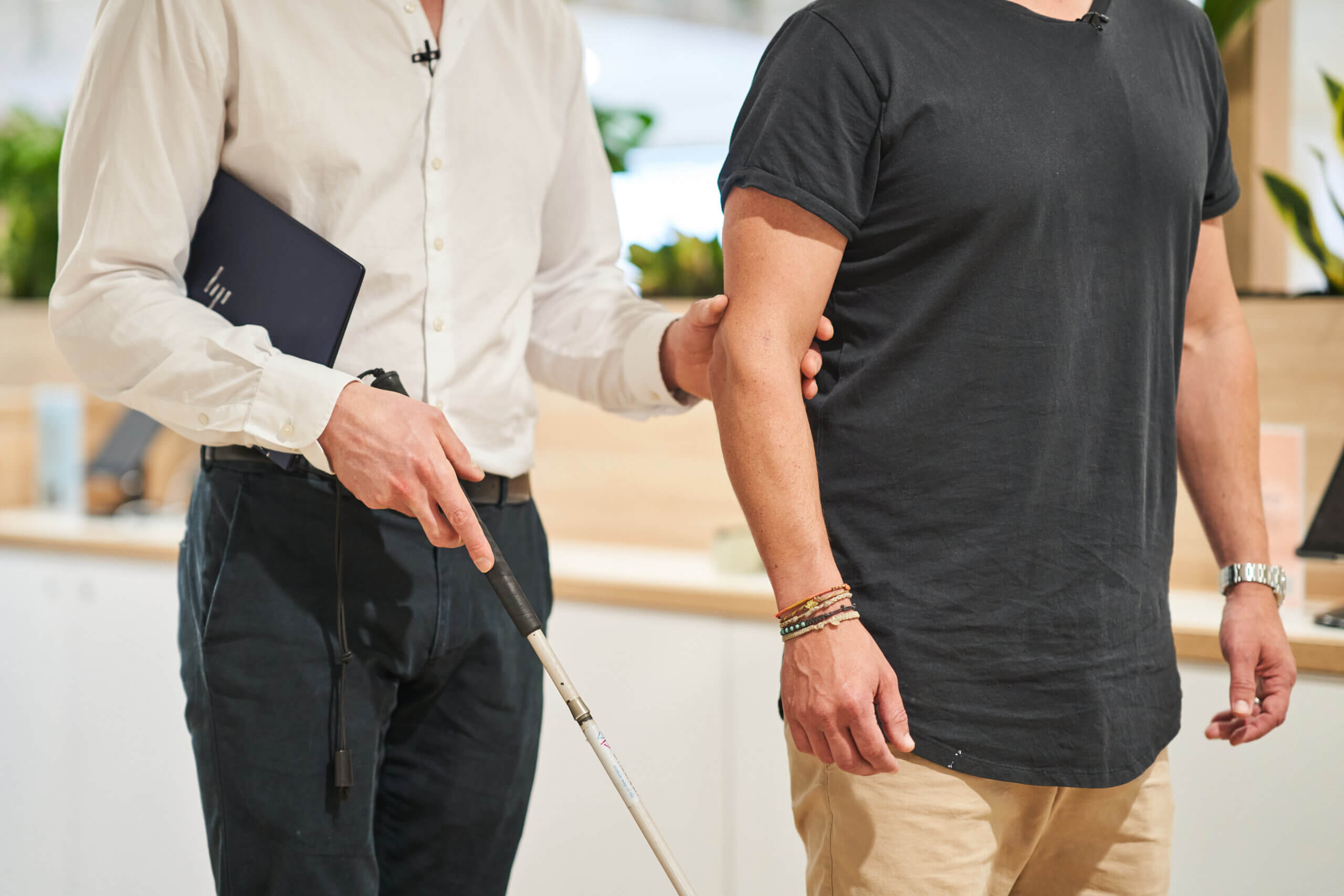
Understanding Service Dog etiquette is just one part of creating a more accessible and inclusive community.
Our Human Guide Training teaches practical skills to confidently assist people living with low vision or blindness in workplaces, organisations and community settings. Through interactive theory and hands-on activities, you’ll gain the knowledge and confidence to provide safe, respectful and effective assistance.