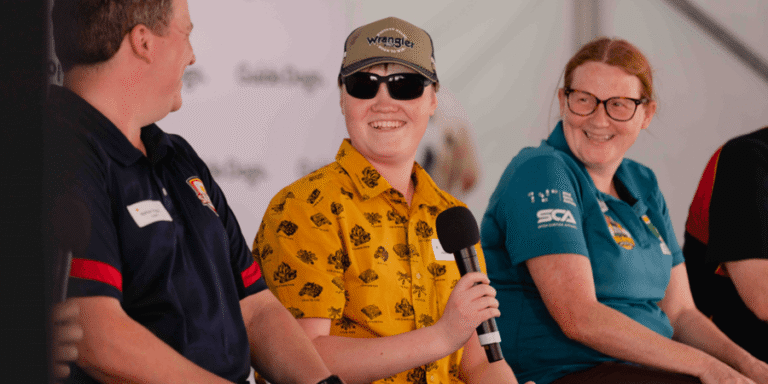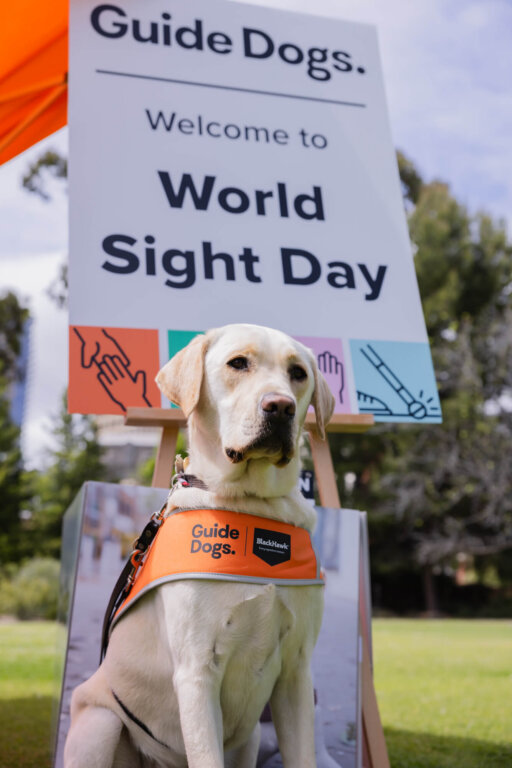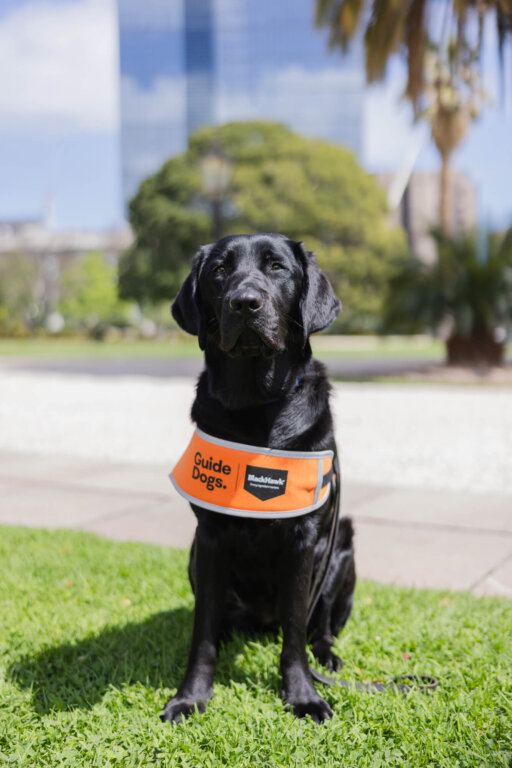
My name is Molly, and I’m a little over two years into my journey with Jervis, my first Guide Dog.
I was diagnosed with Optic Atrophy when I was 4½ years old, and my vision remained fairly steady until I turned 30. Since then, I’ve had some pretty significant drops in my vision roughly every six months, so Jervis has been a real angel in paws for the past two years.
I’ve always loved reading, but now I’m trying to learn to use audiobooks so I can still enjoy that experience. Animals are my greatest love, particularly dogs and horses, and I’m lucky enough to still spend many days with my beloved horse, who I’ve had for nearly 14 years.
It’s unfortunate but true that my vision has impacted my choices and opportunities for work.
I’m currently a client of Guide Dogs SA/NT and was lucky enough to be matched with Jervis. This dog, my angel in paws, has truly been an absolute life changer for me. People who hear about me or see me out and about on public transport or in the city are often shocked. They can’t believe the girl who wouldn’t leave the house without the support of a family member is now out meeting people and travelling around with my wonder dog. He’s helped my confidence, my ability to speak up and put myself out there so much more.
I’m super excited to be working through a Canine Massage Certification course.
The course is online, with video and PowerPoint lessons that you study before completing tests to move on to the next section. I’ve now mostly finished the theory, learning about dogs, how their bodies are made and move, dog behaviour, and different massage strokes, including when they’re used for dogs of different sizes and ages.
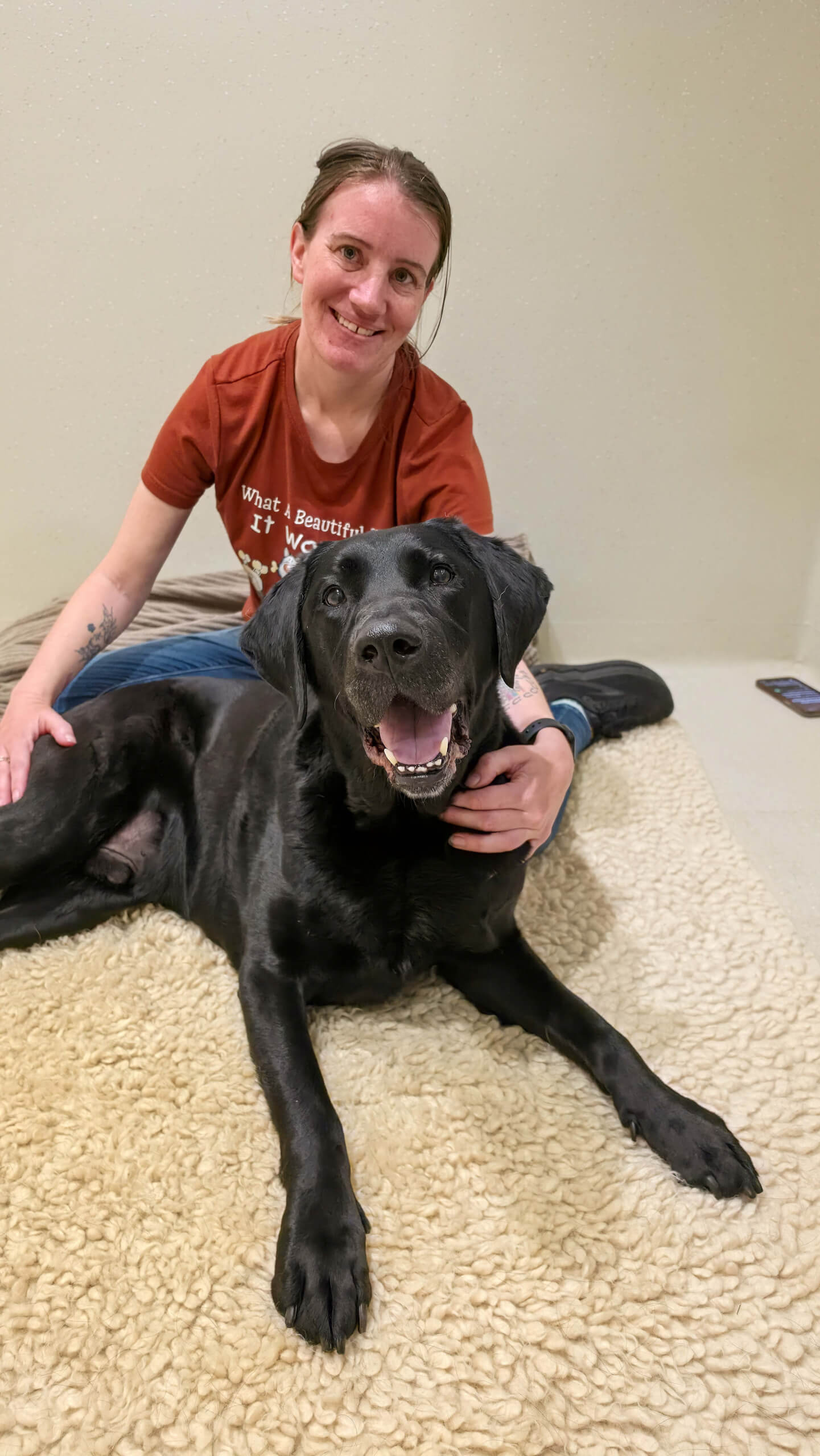
Guide Dogs SA/NT have been amazing in helping me get my hands on more dogs for the practical experience I need to finish the course. I have to complete 50 hours of hands-on massage work with a variety of dogs, and it’s been so great that I’ve already had sessions with some of the gorgeous Ambassador Dogs, a couple of working Guide Dogs, and a few dogs in training for the different roles Guide Dogs SA/NT offers. The team have been super supportive and genuinely curious in a way that makes me feel really encouraged. They’ve even set me up with a room that we’ve been able to make relaxing and comfortable, which has been incredible.
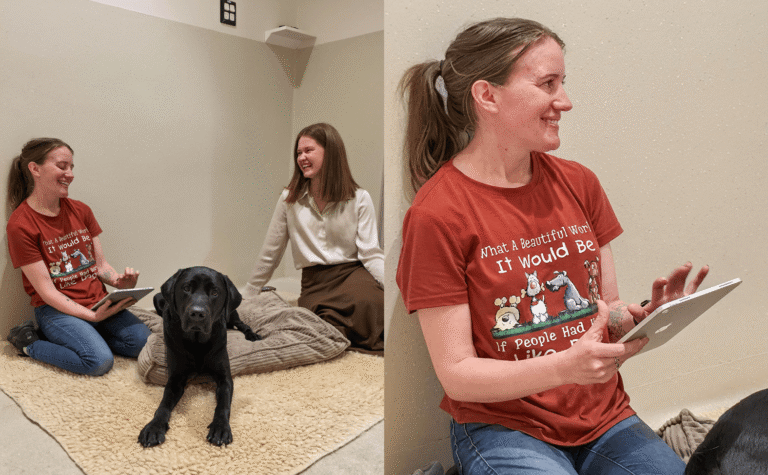
The best part of the course? Aside from making myself put myself out there, which is something I really struggle with and tend to avoid, it’s been amazing to see the changes in the dogs I’ve been lucky enough to have as repeat customers while I’m studying. It’s helped me see that what I’m doing really is making a difference.
From a clinical perspective, the benefits of massage for working dogs include helping to tone and condition muscles, increasing blood flow so their organs can work at their best, keeping their skin and coat healthy and comfortable, reducing stress, and helping identify muscle tension earlier.
From my own perspective, yes, all of those things are important. But I also feel like the dog is being seen in a way they’re not normally. They get to let go of not only the physical load they carry, but also the mental load these gorgeous creatures so willingly take on every day.
Once I finish my certificate, I’m really hoping to find work massaging dogs – especially those in working roles, but also family pets and any dog who might need me.
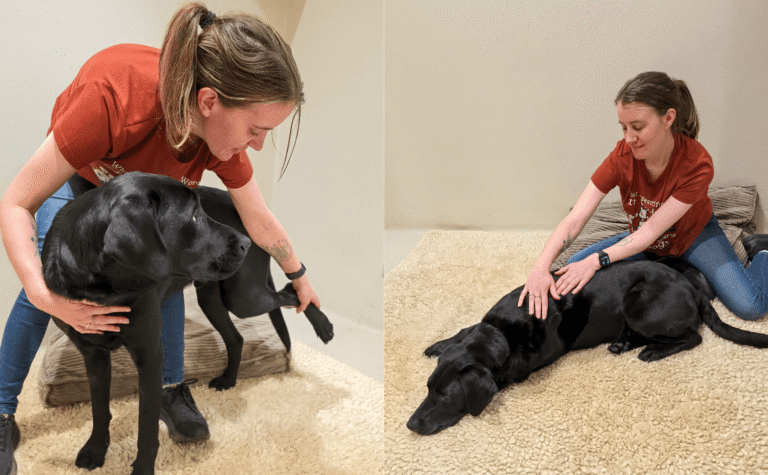
I think it’s without a doubt essential that those of us living with blindness or low vision are supported and included in education and training opportunities, especially when you find something you’re absolutely capable of doing. Inclusion is so important, and you don’t really understand why until someone tells you, “Oh sorry, you’ve been doing really well, but we can’t take you any further because we probably wouldn’t be able to find someone who would insure you.”
Blindness and low vision mean you might do something differently, but does different automatically mean wrong? I don’t think so. People need to become more comfortable with different, because doing something one way or the same old way doesn’t work for every single person or every single animal.